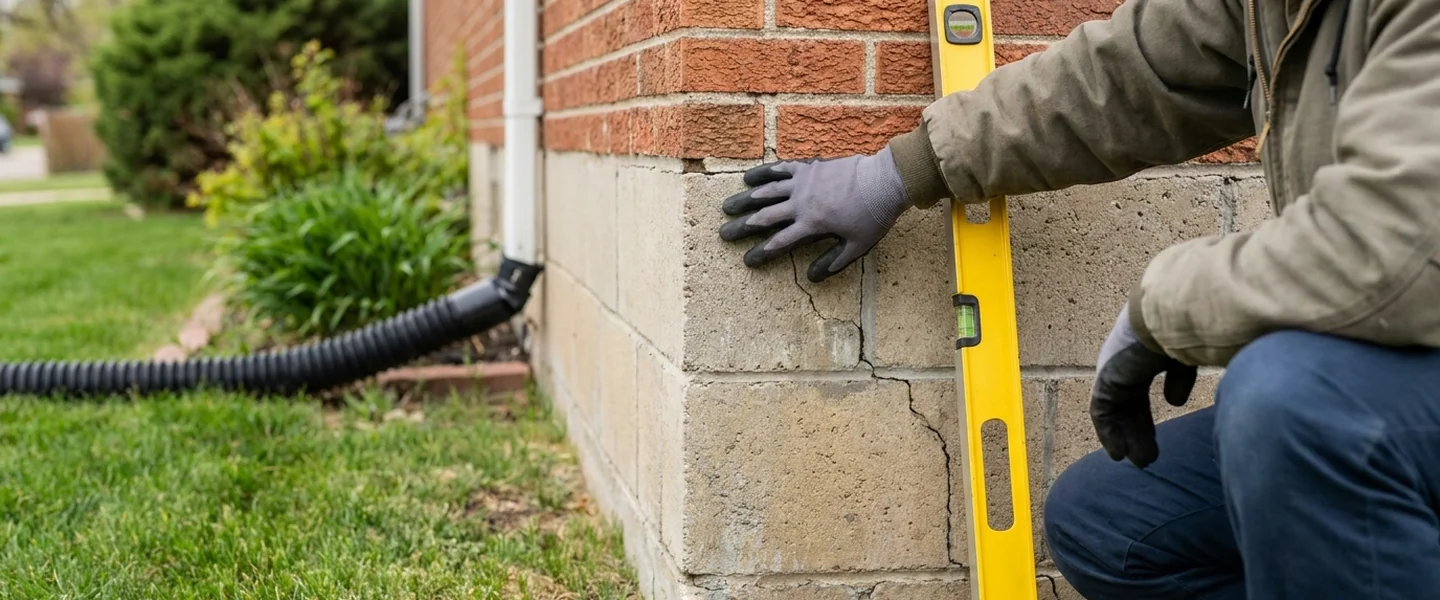
Foundation Repair Brighton CO
Foundation repair serving Brighton homeowners — push pier stabilization, crack injection, and waterproofing on the reactive clay and alluvial soils of Adams County's growing eastern corridor.
Call (720) 740-6511 — Free InspectionBrighton's foundation challenges come from two distinct soil environments that coexist in the same city. Downtown Brighton and the older neighborhoods near historic Main Street sit on classic Adams County expansive clay — highly reactive, highly problematic for older bungalow and ranch foundations. The newer Prairie Center subdivisions off I-76 sit on a mix of engineered fill and alluvial South Platte deposits that compact and consolidate as new construction settles — showing foundation movement within 5–15 years of build date rather than waiting 40 years like the older clay-soil homes.
We serve Brighton as part of our Adams County primary service area. From Thornton we're typically on-site within 30 minutes. We've inspected foundations in the 80601 zip code across both soil environments and know what each requires.
Why Brighton Homes Need Foundation Repair
Brighton receives roughly 13 inches of annual precipitation, with a significant portion compressed into the spring snowmelt window of March through May. The South Platte River corridor runs just east of the city — the alluvial soils in that zone have a higher water table and are more susceptible to seasonal saturation than the upland clay soils to the west. Homes within a mile of the river corridor can see basement water entry during spring events even when the river itself isn't flooding.
The downtown Brighton bungalows and ranches along Bridge Street and the older residential blocks were built between the 1920s and 1960s — some with stone or brick foundations that have never been waterproofed by any modern standard. These older foundation types are highly permeable and routinely develop active seeps at mortar joints. Repair approach depends heavily on the foundation material: stone foundations typically require interior drain tile because injection isn't practical on irregular stone surfaces.
The newer I-76 corridor subdivisions — Prairie Center, Brighton Crossing, Bromley Park — are a different story. These 2000s–2010s poured concrete foundations often show early diagonal crack formation as engineered fill beneath the slab consolidates. These cracks are typically sealing candidates in the first 10 years, but they should be monitored for widening that would indicate ongoing settlement rather than simple shrinkage.
What We Typically Find in Brighton Foundations
- Diagonal corner cracks in newer poured-wall homes — common in Prairie Center and Brighton Crossing subdivisions. Fill consolidation pulls corners down relative to midspan. Crack width and displacement at the inspection determines whether injection sealing is sufficient or piering is needed.
- Active mortar joint seeps in downtown bungalows — stone and old brick foundations near historic Main Street and Bridge Street cannot be injection-sealed the way concrete can. Interior drain tile is the correct approach — it intercepts the water at the footing level regardless of where it enters through the irregular foundation surface above.
- Sump pits without battery backup — Brighton's spring storm season coincides with peak melt, and power outages during these events are common. Homes with only a primary pump are one outage away from a flooded basement during the most active water period of the year.
- High water table seepage in the South Platte corridor — homes within a half-mile of the river routinely show floor slab seeping during spring even without visible wall cracks, because the water table rises above the slab level during peak melt. Interior drain tile at the floor-wall joint handles this.
Our Process for Brighton Homes
- 1Free On-Site Inspection — We come to your Brighton home, assess both exterior and interior foundation conditions, note soil type and proximity to drainage features, and document all findings in a written report delivered the same day.
- 2Soil-Appropriate Repair Scope — Our recommendation accounts for Brighton's soil variation. Downtown homes on clay get different repair prescriptions than Prairie Center homes on consolidated fill. We don't apply a one-size-fits-all template.
- 3Written Itemized Quote — Every repair line is specified in writing before work begins: method, materials, warranty terms, and timeline.
- 4Adams County Permit Management — For structural piering and egress windows, we handle the Adams County permit application and inspection schedule.
- 512-Month Follow-Up Included — We return at 12 months, remeasure, and document the one-year clearance in your warranty file.
Foundation Services Available in Brighton
- Basement Waterproofing — interior drain tile for Brighton's clay and alluvial-soil basements
- Foundation Crack Repair — epoxy and polyurethane injection for poured concrete foundations
- Bowing Wall Stabilization — carbon fiber and wall anchors
- House Leveling & Piering — push piers for fill-soil settlement in newer subdivisions
- Sump Pump Installation — primary and battery-backup for Brighton's spring melt season
- Egress Window Installation — code-compliant, permitted by Adams County
What We Typically See in Brighton's 80601 Zip Code
The 80601 zip encompasses both old Brighton (the downtown historic district and surrounding ranch neighborhoods) and the newer eastern and northern growth corridors. The soil profile transitions from high-plasticity clay in the downtown core to mixed alluvial and fill soils in the growth corridors — and our repair approach transitions with it.
A pattern specific to Brighton's newer Prairie Center area: homes built between 2003 and 2015 on what was previously agricultural land often show uniform floor slab cracking rather than perimeter wall cracks. This indicates the entire slab is settling as the agricultural topsoil compresses under the structure's weight — a consolidation issue that typically stabilizes within 15–20 years but causes cosmetic and functional problems in the meantime. Interior slab crack injection handles the sealing; if the settlement is ongoing, push piers under the foundation perimeter stop the movement.
For downtown Brighton historic properties, we work carefully around brick and stone construction to avoid disturbing original masonry. Our drain tile installations in these homes are designed to be removed and reinstated if structural work to the original masonry is ever needed — we document the system in a way that future contractors can work around it.
Brighton Foundation Repair FAQ
How far is your team from Brighton?
We're based in Thornton — Brighton is typically a 20–30 minute drive via I-76. We're in your area regularly and can usually schedule a same-week inspection. Call (720) 740-6511 to confirm availability.
My Brighton home is newer construction — do I really need foundation repair already?
Newer homes on engineered fill in Brighton's growth corridors can show foundation movement within 5–15 years as the fill consolidates. Early diagonal corner cracks and floor slab cracking are the typical signs. Addressing consolidation settlement early — with crack sealing and monitoring — is less expensive than waiting until the cracks widen to structural width.
Does the South Platte river proximity affect my foundation?
Yes, potentially. Homes within a half-mile of the South Platte floodplain tend to have a higher seasonal water table during spring melt. We note your proximity to drainage features at the inspection and factor it into the waterproofing scope. A sump system sized for higher water table inflow is part of the recommendation for these properties.
Can you repair a stone foundation in a downtown Brighton historic home?
Interior drain tile is the correct approach for stone foundations — the irregular stone surface isn't amenable to injection sealing. We install the drain tile system below the existing stone footing level and capture any water that migrates through the stone before it reaches the floor. We work carefully to preserve the original masonry.
Does the Adams County permit process take long for piering?
Adams County typically schedules structural permit inspections within 5–10 business days of permit application. We handle the filing and will give you a realistic timeline based on current Adams County queue when we deliver the written quote.
Brighton Foundation Inspection — Free, This Week
Serving all of Brighton and Adams County. Same-week availability, written report same day.
Call (720) 740-6511